
Travellers love Thailand for much more than its iconic landmarks and wide open horizons. Visitors come for wide range of tourism activities such as eco-friendly accommodation and wildlife encounters. But don’t just stop with the landscapes! Take the opportunity to learn about the people that live in this big country.
Explore the options for a responsible trip
Explore destinations that were recognised for their sustainability efforts
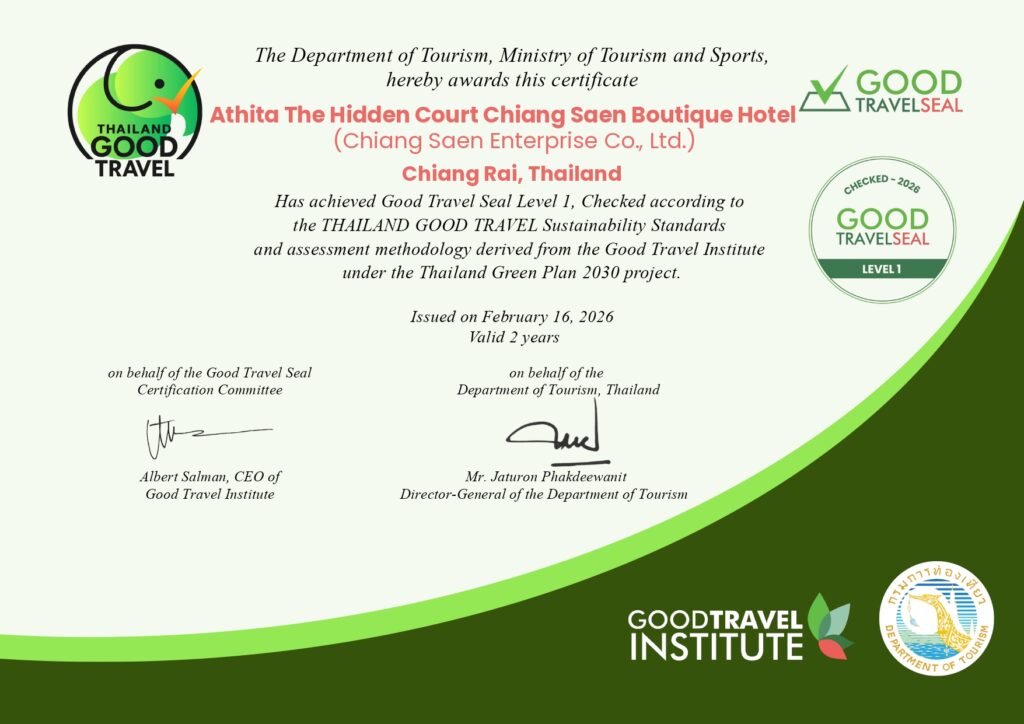
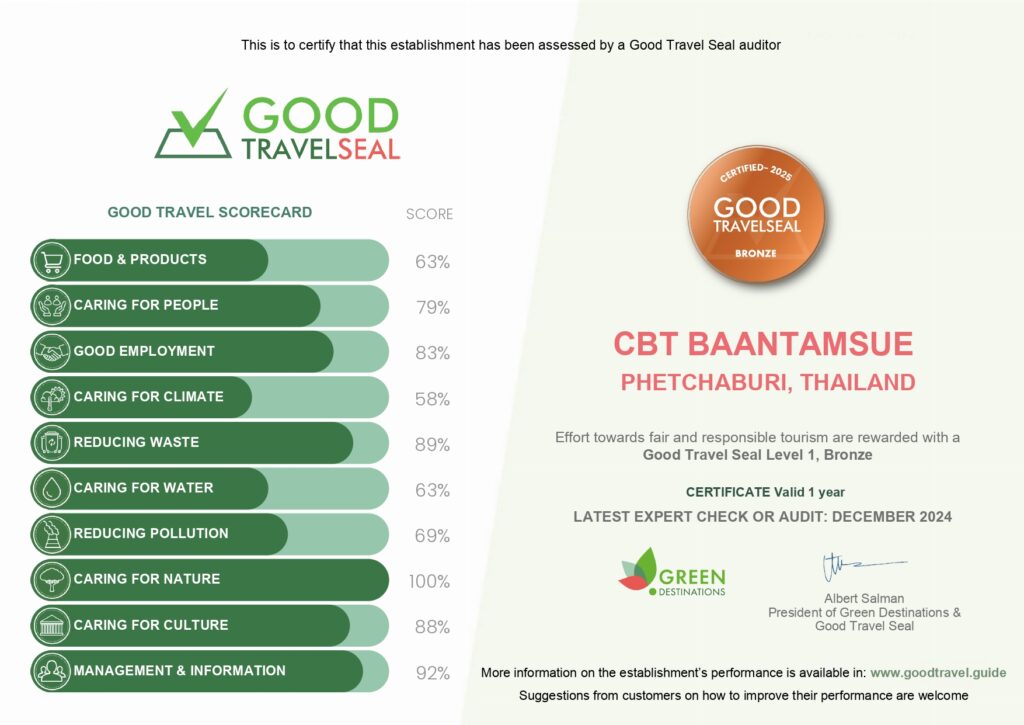
Good Travel Seal Level 1
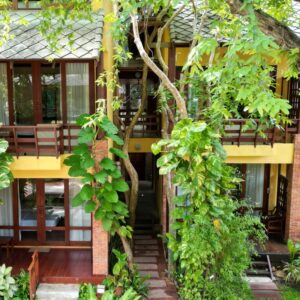
Athita, The Hidden Court Chiang Saen is an award-winning boutique hotel in Thailand’s ancient city of Chiang Saen. Designed with handcrafted bricks and sustainably sourced teak wood, the hotel celebrates local heritage through authentic architecture, Northern Thai cuisine, and immersive cultural experiences. Guests can enjoy meaningful activities such as morning alms giving by the Mekong River, traditional Lanna blessing ceremonies, local craft workshops, and community-based tourism. Athita is committed to responsible hospitality by supporting local communities, preserving cultural heritage, and promoting environmentally conscious travel.
PROMO CODE: GTGATHITA (receive 10% off your stay when booking directly through Email)
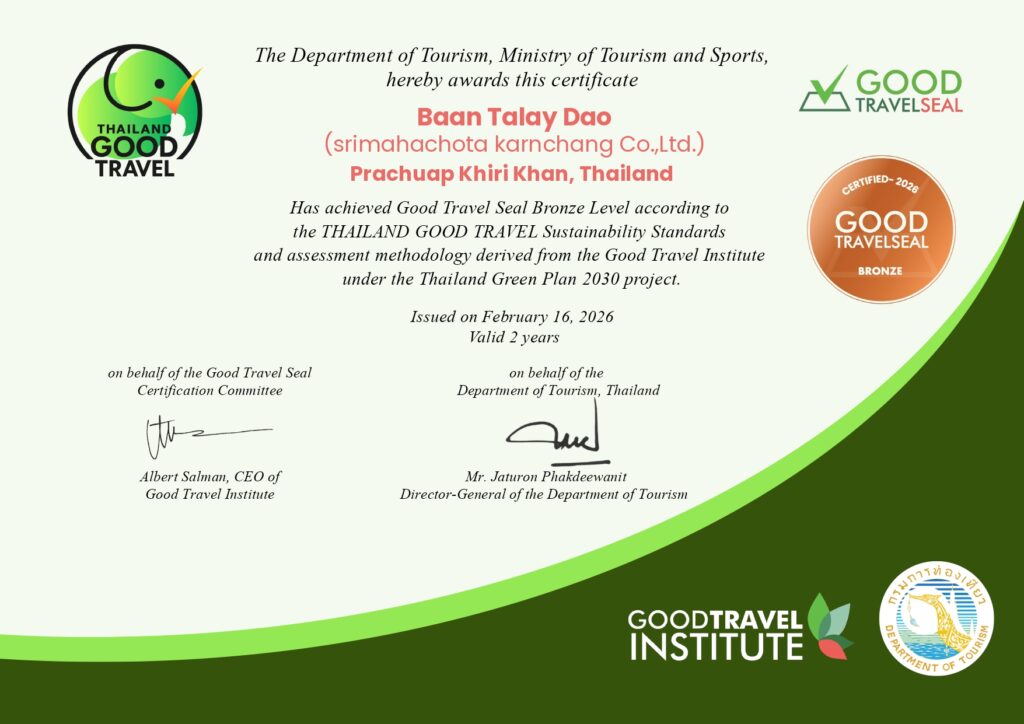
Good Travel Seal Level 1
A seaside retreat set upon pristine white sands, where the horizon merges between the vast sky and the tranquil deep-blue ocean of Hua Hin. A small boutique resort dedicated to driving sustainable tourism in the coastal town — a true Home Between Sea and Stars.
PROMO CODE: GTGBAANTALAYDAO

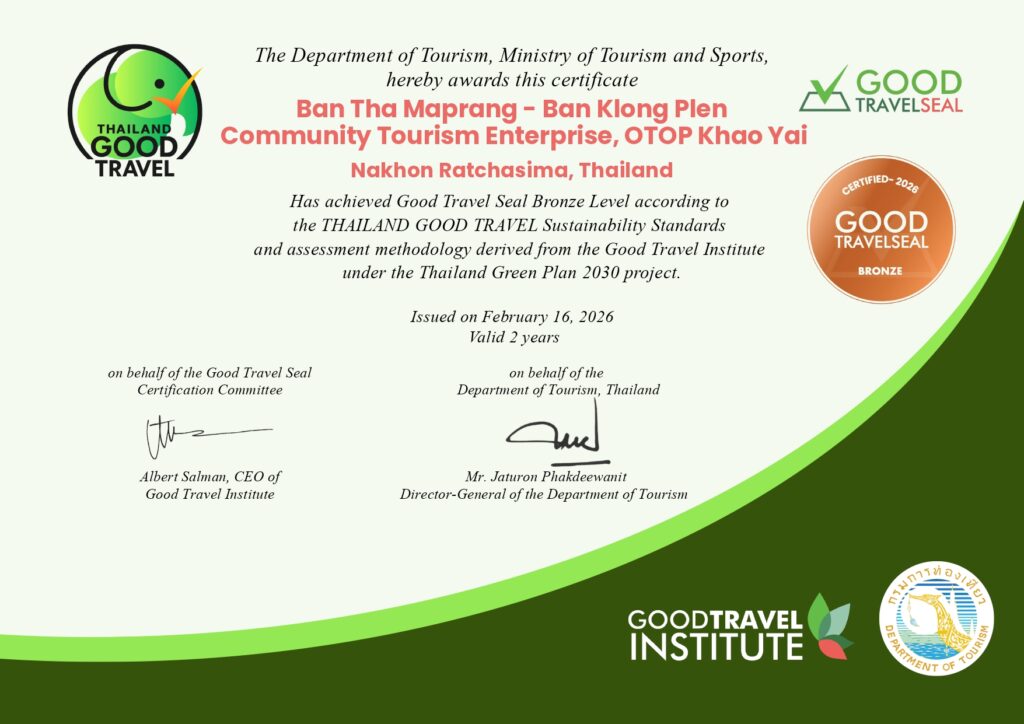
Good Travel Seal Level 1
Walk and bike through a small village near Khao Yai. Check out the community, temples, and farms. Participate in activities with the local community around protecting the local environment. Select a package that fits your schedule and interests.
PROMO CODE: TMPKP317
Good Travel Seal Level 1
Thamsuea is a community surrounded by mountains, rivers, and Kaeng Krachan forest. Zero carbon travel route Delicious local food and organic farming.
PROMO CODE: TSH2549
Good Travel Seal Level 1
Experience Ban Nai Nang – Where Every Journey Creates a Better Future.
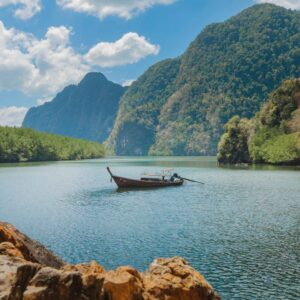
Ban Nai Nang Community-Based Tourism (CBT) invites you to discover the authentic lifestyle of a coastal fishing village in Krabi. Explore lush mangrove forests by traditional long-tail boat, learn local fishing wisdom, enjoy fresh local southern Thai cuisine, and join hands-on conservation and cultural activities led by community members. Every visit supports local livelihoods, protects nature and cultural heritage, and contributes to a more sustainable future. At Ban Nai Nang, you’re not just a visitor—you become part of our community’s story.
Good Travel Seal Level 1
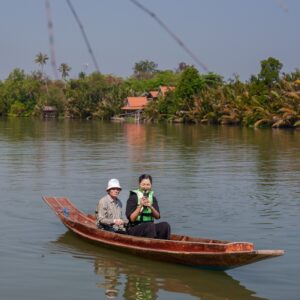
Ban Rim Khlong Homestay invites visitors to experience authentic riverside life along the Mae Klong River in Samut Songkhram, Thailand. Stay with local families, make traditional Thai desserts, produce coconut sugar, create handicrafts, explore organic gardens, and enjoy magical firefly boat tours. Every activity is led by community members, ensuring genuine cultural exchange while supporting local livelihoods. Guided by sustainable tourism principles, Ban Rim Khlong protects its river ecosystem, preserves local wisdom, and promotes low-carbon travel, offering meaningful experiences where visitors become part of the community—not just tourists.
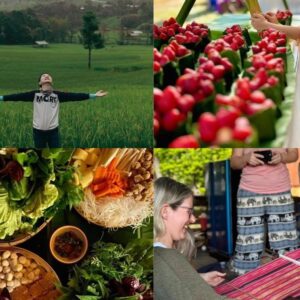
Get inspired with stories from places and people that are acting for a fair and responsible tourism
Chiang Khan is an important tourist destination in Thailand, renowned for its historical value, especially the old wooden houses that locals have adapted to accommodate growing tourism. However, although tourists favour staying in these old wooden houses, some have noted that most of these houses do not fully meet their needs, particularly regarding breakfast options. This leads to accommodation operators missing opportunities to meet tourist demands and increase their revenue, affecting Chiang Khan’s economic opportunities, including employment and the income of local service providers. To address this issue, operators of old wooden house accommodations, along with their network partners in Chiang Khan, have sought solutions by leveraging their strengths. They implemented a breakfast coupon system for tourists to use at local restaurants. This approach effectively matches supply with demand, making operators of old wooden houses “intermediaries” between local restaurant operators and tourists seeking breakfast.
Urban development in Hua Hin has led to challenges in waste management, as garbage overflows threatening the environment and public health of the oldest seaside destination in Thailand. The project “Zero Waste” was born. The journey to achieving this goal was possible through the cooperation of all sectors, from municipality to residents to private organizations. The solution came on different levels , from reducing waste to adopting a circular economy approach. The change made was truly valuable for the environment and the local community.
Songkhla Old Town faces urban deterioration due to economic, social, and environmental changes over time. Furthermore, a lack of awareness and understanding among the community about the importance of preserving the old city contributes to the destruction of valuable heritage buildings. To counter this trend, the Songkhla Heritage Trust has emerged, uniting individuals dedicated to revitalizing their hometown. Through collaboration with public, private, educational and governmental sectors, the association orchestrates various initiatives. These include soliciting public feedback, showcasing the city’s heritage through visual storytelling, fostering tourism, and creating spaces for youth and community engagement.
The development and transformation from an abandoned mine, a place to dispose of garbage and use drugs, into a tourism destination. By focusing on the Buddhist teachings and the historical significance of the place, all sectors aimed to transform the area into a tourist destination, enhancing the economic value of Suphan Buri province, creating jobs for local people and creating 95 community-owned shops.
Thailand’s last Raft House community can be found in Uthai Thani Old Town along the Sakae Krang River. It reflects 400-year-old way of life. However, the community has been impacted by drought, resulting in a decrease in water levels and damage to many raft houses with uncertain daily income from fishing, and aquatic agriculture. To preserve this unique community the water quality of the Sakae Krang River needed to be improved, as long as with enhancing the quality of life for residents, and implementing sustainable tourism initiatives that showcase the cultural lifestyle.
Nestled on a picturesque hill overlooking the Nan River, Wiang Phu Phiang Chae Haeng holds immense cultural significance, drawing devotees from across Thailand. However, tourism in Nan Province faces challenges during the off-season, impacting local businesses. To address this, a unique solution has emerged: revamping the traditional Hok Peng festival with the help of monks, government agencies, tourism businesses, and local communities. This initiative aims to preserve traditions while offering a vibrant cultural experience.
Sustainability
Last year, the Thai government announced more ambitious climate targets and greater priority for the promotion of sustainable practices. Currently, the measures are concentrated in the renewable energy and low-emission transport sectors These efforts, along with growing environmental awareness among both locals and tourists, are contributing to Thailand’s commitment to becoming a more sustainable and environmentally conscious destination.
Trains are a handy way to travel, particularly between Bangkok and Chiang Mai. Buses are widely available, with both long-distance and local routes. For a more local experience, tuk-tuks and songthaews (shared taxis) are common in many towns and cities. In Bangkok, the Skytrain (BTS) and Metro (MRT) offer convenient and affordable public transportation. Furthermore, its picturesque islands often rely on ferries and boats for transportation between them.
Tourism & People
Tourism in Thailand welcomes millions of international visitors annually and plays a crucial role in the country’s economy, contributing around 13.4% to the GDP in 2019. Popular destinations, such as Bangkok, Phuket, and Chiang Mai, tend to draw large crowds, especially during peak seasons.
While these renowned hotspots might sometimes experience overcrowding, the country offers numerous unspoiled regions, like the mountainous north and peaceful islands, providing travellers with plenty of alternative destinations to explore. Thai locals are known for their warmth and friendliness towards foreign guests, and learning a few basic Thai phrases can enhance your experience, as English is not universally spoken outside major tourist areas.
Nature & Wildlife
Thailand has multiple natural landscapes, ranging from beaches and tropical islands to jungles and mountainous terrains. Its abundant wildlife is a significant draw for nature enthusiasts. The country is home to several national parks and wildlife sanctuaries where visitors can experience the richness of its flora and fauna. Among the wildlife species found in Thailand are elephants, tigers, gibbons, various bird species, and diverse marine life. Additionally, Thailand offers opportunities for activities such as jungle trekking, snorkelling, and scuba diving to explore its captivating natural beauty, both on land and underwater.
Brazil has 9 destinations featured in the Top 100 Sustainable Destinations 2021.
Other sustainability certifications can be seen here (English) and here (Portuguese).
Fernanda Rodak | Page Editor
“Brazil is a worldwide known hotspot for biodiversity as well as home to a multitude of cultural expressions. The natural and cultural heritage and immense variety of tourism experiences in the country are valuable assets for its competitiveness. Yet, as we envision a post Covid-19 era, sustainability in tourism becomes crucial to build resilience and guarantee the long-lasting health of Brazil’s ecosystems and well-being of the hosting communities. This would also ensure an active contribution of the country’s tourism sector to the Sustainable Development Goals.”