


Discover Good Travel Experiences in this Destination here
Qatar seamlessly blends futuristic modernity with deep cultural heritage, making it a captivating Arabian Peninsula destination. Visitors can explore the stunning Souq Waqif, a bustling traditional market, or marvel at the architectural masterpieces housing the Museum of Islamic Art and the National Museum of Qatar. Beyond urban life, Qatar boasts breathtaking natural wonders. The iconic Inland Sea, or Khor Al Adaid, is a rare UNESCO-recognized ecosystem where massive desert dunes dramatically meet the ocean waters. Travelers can enjoy thrilling desert safaris, kayak through Al Thakira’s lush mangrove forests, and relax on pristine, sun-drenched beaches.
The map below features certified or verified businesses in yellow.
A Good Travel Experience is a tourism activity that creates real benefits for local people and communities, while keeping its impact on nature, culture, and the climate lower than similar activities. Learn more about each Good Travel Experience:

Kinshasa
Primate observation and rainforest conservation
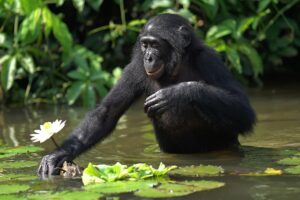
Enter the rainforest home of the bonobo for a rare wildlife encounter in the DRC. Guided by local experts, travellers trek through tropical forest landscapes to observe bonobo groups in their natural habitat.
The experience highlights bonobo behavior, ecosystem dynamics, and community-based conservation initiatives that protect both wildlife and livelihoods. More than observation, this journey promotes understanding and respect for a species found only in this region.
GOOD TO KNOW

Kinshasa
Biodiversity and conservation in Africa’s largest rainforest
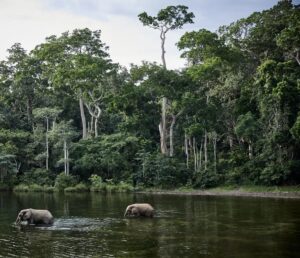
Venture into the Congo Basin, one of the planet’s most biodiverse rainforests. This expedition explores remote forest regions defined by vast river systems, dense vegetation, and exceptional wildlife.
Highlights may include tracking bonobos in Salonga National Park and discovering okapis in the Ituri Forest, guided by local and scientific expertise. The journey emphasizes conservation, climate relevance, and responsible travel—offering meaningful engagement with one of Earth’s last great wildernesses.
GOOD TO KNOW

Kinshasa
River exploration and climate action
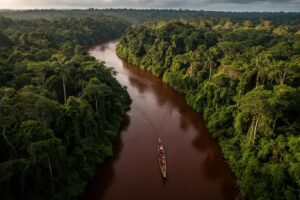
Follow the course of the Congo River on an expedition that combines scenic exploration with environmental education. Travellers experience riverside life while learning about forest ecosystems essential to the Congo Basin’s health.
A key focus is REDD+ initiatives aimed at reducing deforestation and supporting local communities. Through direct insight from guides and experts, the journey connects tourism with real-world conservation efforts, fostering responsible engagement with biodiversity and climate solutions.
GOOD TO KNOW

Kinshasa
Community stewardship in the forests of the DRC
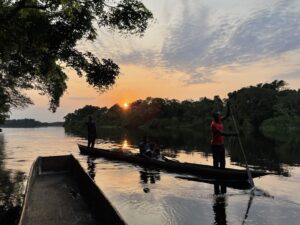
This six-day journey invites travellers into the ancient forests of the Democratic Republic of Congo through an Indigenous-led program centered on cultural heritage and environmental stewardship. Guided by local forest communities, visitors learn traditional ecological knowledge shaped by generations of coexistence with the land.
Through storytelling, shared experiences, and direct engagement with forest guardians, the program highlights the deep connection between conservation and community wellbeing. Designed for culturally conscious travellers, this experience supports sustainable livelihoods while fostering meaningful understanding of one of the world’s most vital ecosystems.
GOOD TO KNOW

Kinshasa
Forest research and species protection
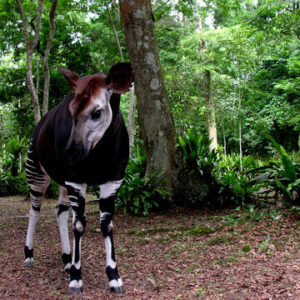
Engage with frontline conservation efforts focused on the elusive okapi in the forests of the DRC. Guided by naturalists and specialists, travellers explore habitat landscapes while learning about research, monitoring techniques, and ecological challenges.
The program reveals how scientific data, community collaboration, and sustainable development intersect to protect this unique species. Combining education, exploration, and meaningful contribution, the journey offers insight into conservation in practice within one of Africa’s most biodiverse regions.
GOOD TO KNOW

Kinshasa
Landscapes, livelihoods, and ecological contrast
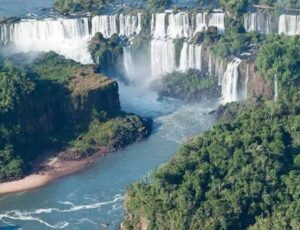
Explore the vast savannas of southern DRC, where open grasslands, rolling plains, and dramatic waterfalls shape the region’s identity. This journey reveals the ecological importance of savanna ecosystems while examining how agriculture and mining influence local communities.
Travellers gain insight into the relationship between land, water, biodiversity, and livelihoods, engaging with local knowledge along the way. More than scenic exploration, the experience offers a deeper perspective on environmental and social dynamics within the Congo Basin.
GOOD TO KNOW
Explore destinations that were awarded for their sustainability efforts
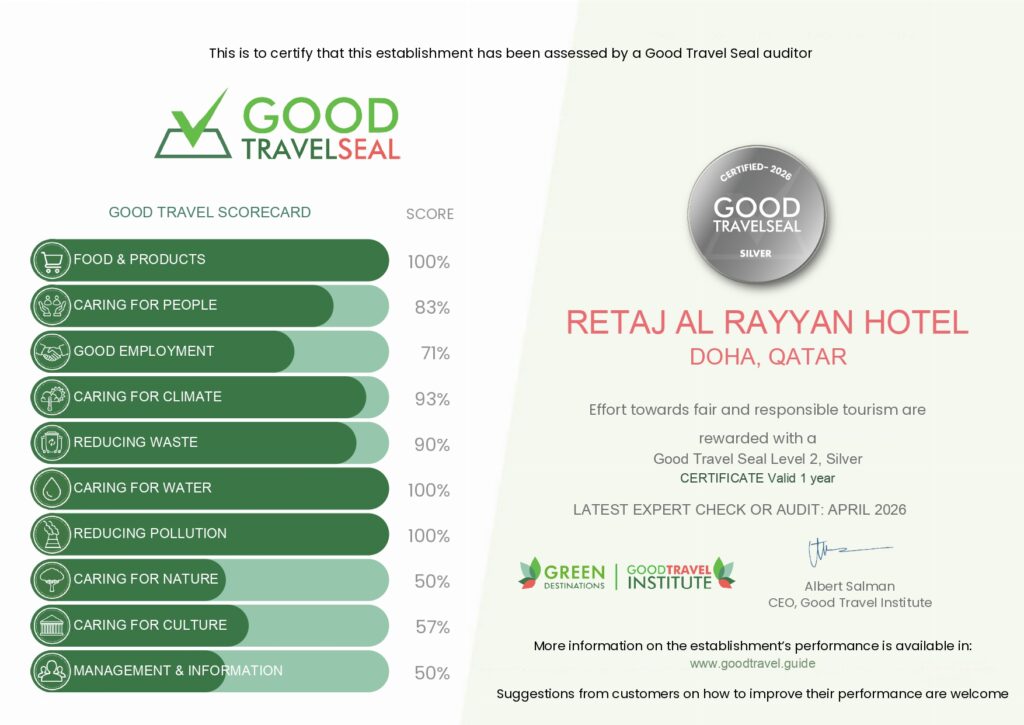
Good Travel Seal Level 2
Experience the essence of Arabian hospitality at Retaj Al Rayyan, a premier destination in the heart of Doha’s Al Dafna business district. Overlooking the Arabian Gulf, our hotel blends modern luxury with a commitment to the “Retaj Family” values, ensuring a warm and inclusive atmosphere for every guest. We prioritize sustainability and wellness, offering elegant rooms, state-of-the-art facilities, and authentic dining experiences. Whether visiting for business or leisure, guests enjoy a sophisticated environment that embodies local culture and premium service standards, making every stay both memorable and environmentally conscious.
Sustainability
Qatar actively promotes sustainability through its National Vision 2030, focusing on green development. The country built Msheireb Downtown Doha, a major sustainable regeneration project. Qatar also hosted the first carbon-neutral FIFA World Cup. Furthermore, it expands solar energy production and implements advanced water recycling technologies to preserve desert resources.
Tourism & People
Qatar features a diverse, multicultural society where expatriates make up the vast majority of the population. The local Qatari culture is deeply rooted in Islamic traditions and Bedouin heritage, emphasizing hospitality, family loyalty, and respect. While Arabic is the official language, English is widely spoken due to the international community. This blend of global influences and conservative Arab customs creates a unique social fabric. Traditional attire, like the thobe and abaya, coexists with modern global fashion, reflecting Qatar’s rapid globalization alongside its commitment to cultural preservation.
Citizens from over 100 countries—including the US, UK, EU, and Canada—can secure a free Visa on Arrival valid for up to 30 or 90 days
Doha Metro: Utilize the highly efficient, fully electric Doha Metro network. It connects Hamad International Airport directly to major cultural spots, stadiums, and downtown business hubs.
Tram and Electric Buses: Use the Lusail Tram and Metrolink electric feeder buses. They offer zero-emission, seamless first-and-last-mile connectivity throughout Doha’s urban center.
Language Basics: Arabic is the official language, but English is widely spoken across all hospitality, retail, and transit sectors.
Cultural Courtesies: Learn simple Arabic phrases like “Shukran” (Thank you) and “As-salamu alaykum” (Peace be upon you).
Nature & Wildlife
Important Notice: Awards, seals, recognitions, and competition results presented on this website do not constitute certification unless explicitly stated as “GSTC-certified against Green Destinations Standard” following independent third-party conformity assessment.
Get in touch
Support
We are a multicultural, creative, and dedicated team working to advance evidence-based, responsible destination management and lower-impact travel. Join us in our fight against the climate crisis, single-use plastics, and over-tourism!